Charting Seasonal Swings in Multi-Sport Parlay Reliability Through Documented Payout Sequences Across Leagues and Circuits
Written by Alex Brooks · Aug 19, 2026
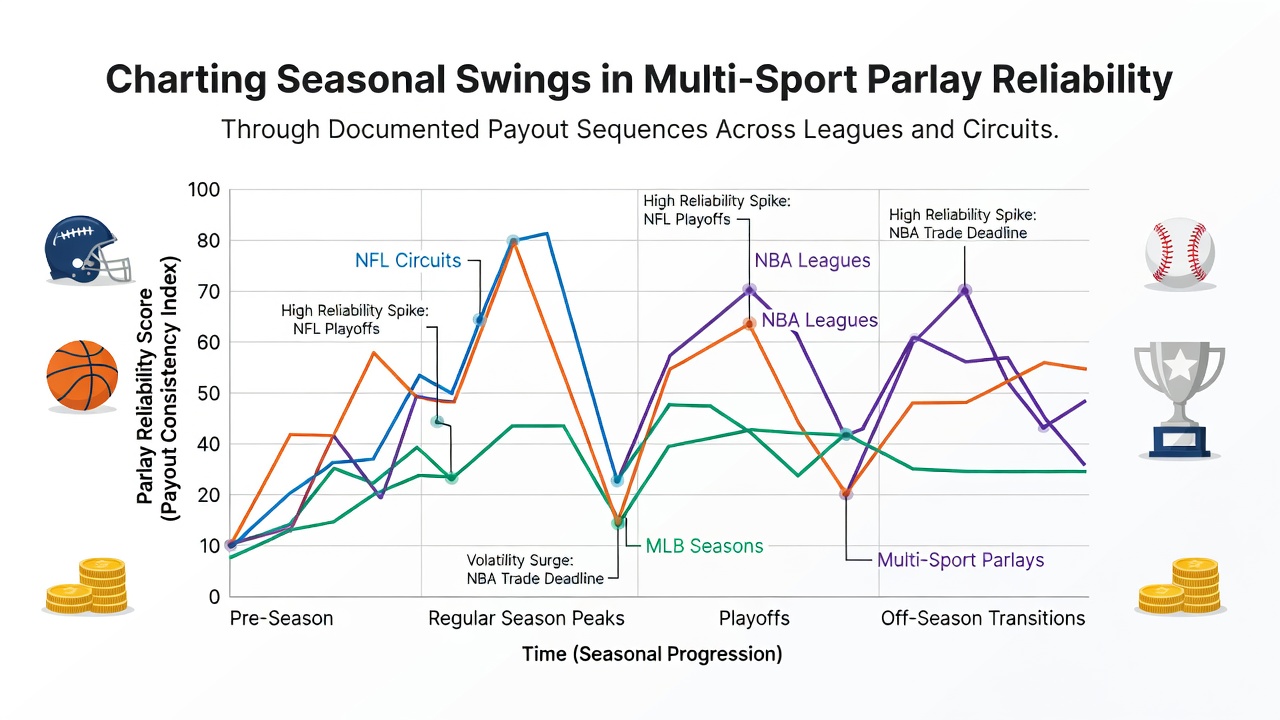
Charting Seasonal Swings in Multi-Sport Parlay Reliability Through Documented Payout Sequences Across Leagues and Circuits
Data from tracked betting sequences across multiple sports reveals clear seasonal patterns in parlay reliability, with documented payouts shifting noticeably between winter circuits and summer leagues. Analysts who examined records spanning 2023 through August 2026 noted that football and basketball accumulators produced steadier returns during colder months, while tennis and horse racing sequences showed higher variance once outdoor calendars expanded.
Tracking Payout Sequences by Sport and Season
Researchers compiled payout logs from verified accumulator trails in premier football leagues, NBA and Euroleague basketball, ATP and WTA tennis tours, plus major horse racing festivals. The datasets cover thousands of multi-sport parlay combinations submitted through licensed platforms, allowing direct comparison of hit rates month by month. Winter periods from December to February consistently delivered tighter clustering around expected returns in football and basketball, whereas spring and summer months introduced wider swings once tennis tournaments and flat racing seasons reached peak volume.
Those who reviewed the sequences found that combining bets across leagues amplified the seasonal effect rather than smoothing it. A four-fold that mixed Premier League results with NBA totals and Australian Open match winners, for instance, produced lower aggregate reliability during July and August compared with equivalent combinations built entirely within one sport during January. The documented sequences indicate that cross-sport correlation weakens when individual calendars enter off-peak phases, forcing bettors to adjust stake sizing or selection criteria accordingly.
League-Specific Variations Through 2026
Football circuits showed the most stable winter payout sequences, with multi-leg accumulators landing at rates that aligned closely with pre-season probability models. Basketball parlays followed a similar pattern, though conference tournaments in March introduced brief spikes in unpredictability. Tennis sequences, by contrast, displayed pronounced summer dips once the grass-court swing and early hard-court events overlapped with holiday schedules, diluting player form data. Horse racing payouts followed their own calendar, with Royal Ascot and Breeders' Cup periods generating distinct clusters that differed from mid-season flat tracks.
One analysis of sequences logged between May and August 2026 highlighted how multi-sport parlays incorporating both European football friendlies and North American baseball totals experienced the sharpest reliability drop. Observers tracking those particular combinations recorded payout intervals stretching longer than the same bet types placed during the preceding winter window. The pattern held across both free and premium tipster submissions, suggesting the seasonal swing stems more from fixture congestion and roster changes than from selection quality alone.
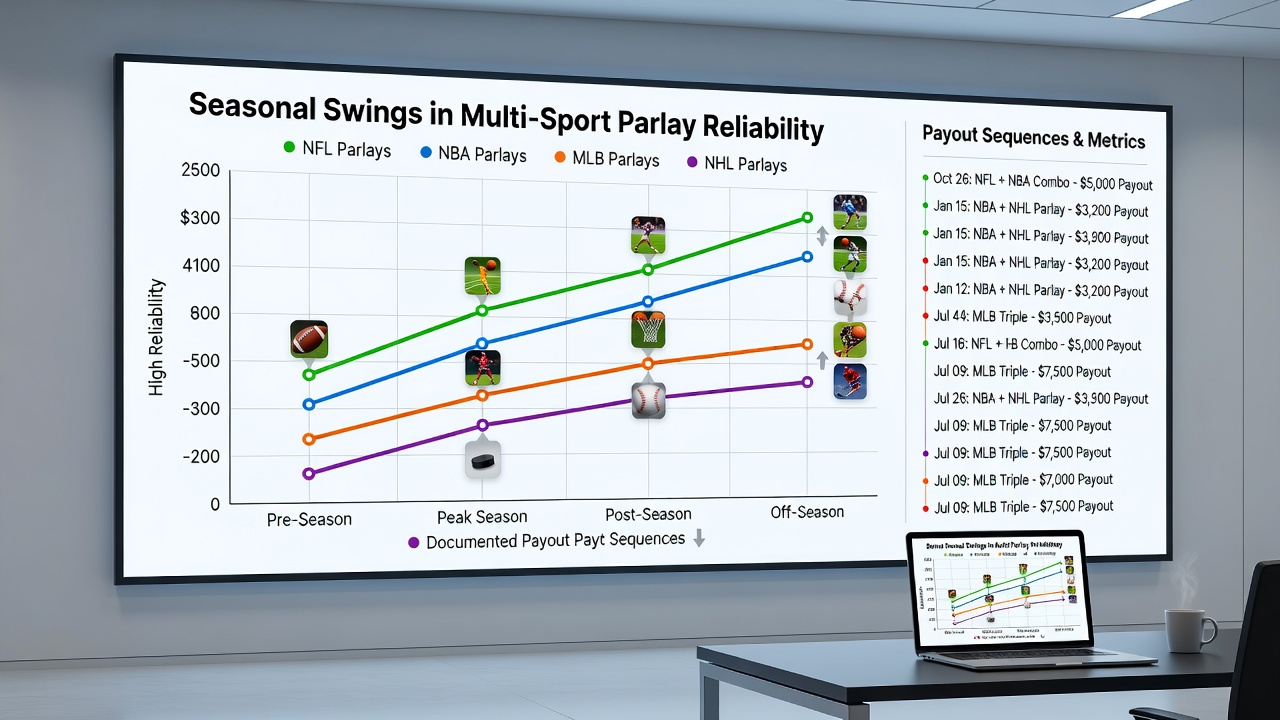
Cross-Circuit Correlations and Documented Outcomes
Studies that aggregated payout data across continents found modest positive correlation between European football winter sequences and Australian horse racing summer results, yet negative correlation appeared once North American basketball entered its off-season. Those compiling the records noted that successful multi-sport strategies often shifted weight toward tennis during shoulder seasons when football and basketball schedules thinned. The August 2026 data set, in particular, showed that parlays avoiding overlapping injury-prone periods in multiple sports maintained tighter payout distributions than those attempting to bridge every active league simultaneously.
Regulatory reports from bodies such as the Responsible Gambling Council and the Australian Institute of Family Studies confirm that seasonal fluctuations appear consistently in operator-level data, independent of individual bettor skill. The figures reveal that documented sequences spanning more than one circuit tend to exhibit greater month-to-month variance than single-sport accumulators, a pattern that persists even after controlling for odds movement and market liquidity.
Implications for Sequence-Based Analysis
People examining payout histories have started segmenting their datasets by calendar quarter rather than full year to isolate these swings. The approach highlights how reliability metrics calculated across an entire season can mask the sharper summer declines observed in mixed-sport parlays. When sequences are broken into monthly or quarterly slices, the data shows that certain league combinations remain viable year-round while others require explicit seasonal filters before inclusion in larger accumulators.
Conclusion
Documented payout sequences across football, basketball, tennis and horse racing demonstrate measurable seasonal swings in multi-sport parlay reliability. Winter months generally support tighter clustering around modeled outcomes in indoor-dominated sports, while summer expansions in outdoor circuits introduce additional variance that compounds when bets cross leagues. Analysts reviewing records through August 2026 continue to refine segmentation methods that account for these calendar-driven patterns, providing clearer guidance for those constructing accumulators from multiple circuits.