Cross-Sport Signal Sync: How Tipster Data Layers Reveal Correlations Between Football Form Trends, Racing Pace Metrics, and Tennis Serve Statistics in Accumulator Construction
Written by Klara Washington · Aug 12, 2026
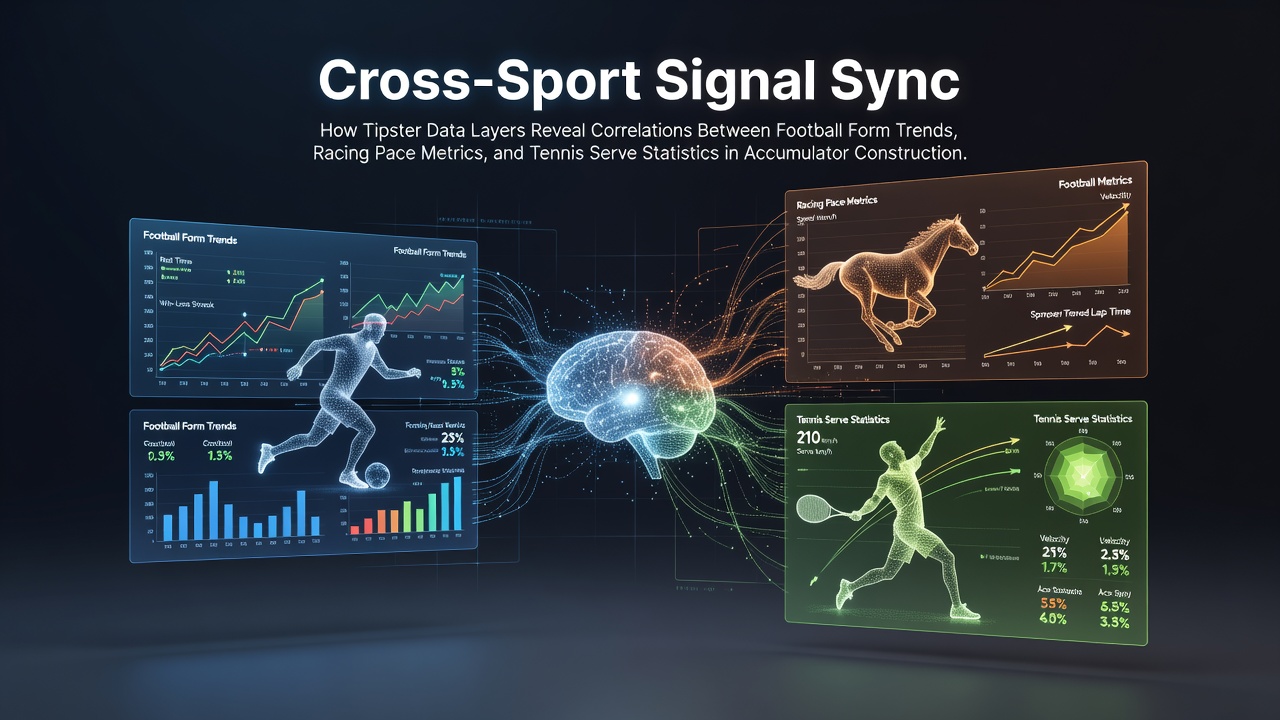
Cross-Sport Signal Sync: How Tipster Data Layers Reveal Correlations Between Football Form Trends, Racing Pace Metrics, and Tennis Serve Statistics in Accumulator Construction
Data Layers in Multi-Sport Tipster Platforms
Tipster platforms aggregate performance indicators from football, horse racing, and tennis into unified datasets that support accumulator construction, and researchers have tracked how these layers align across events since the expansion of digital tracking systems in the early 2020s. Football form trends include sequences of results, goal differentials, and possession percentages, while racing pace metrics capture sectional times, average speeds over distance, and finishing bursts, and tennis serve statistics record first-serve percentages, ace rates, and break-point conversion. When combined, these indicators produce layered signals that tipster services use to identify potential overlaps in outcomes, according to analyses from the American Gaming Association on cross-sport data integration.
Platforms maintain separate feeds for each sport yet apply synchronization protocols that map variables such as recent momentum or efficiency ratings onto common scales, and this process allows construction of accumulators that span multiple disciplines without relying on isolated single-sport streaks. Data recorded through August 2026 shows continued growth in the volume of synchronized records, with daily updates from major leagues feeding into the same repositories that store racing and tennis figures.
Football Form Trends and Their Measurable Components
Football datasets record sequences of home and away results alongside expected goal values and defensive solidity measures, and analysts compare these against historical benchmarks to generate form indices that update after each matchday. Tipster services layer these indices with variables such as rest days between fixtures and travel distance, creating granular profiles that feed into multi-leg bets. Observers note that form trends often stabilize over four to six matches, which provides a window for correlation checks against other sports.
Records from European and South American competitions demonstrate consistent patterns in how teams maintain or lose momentum, while comparative tables published by data providers illustrate how these patterns intersect with pace and serve metrics from parallel events.
Racing Pace Metrics and Sectional Analysis
Racing platforms log sectional splits at multiple points along each course, together with overall race times adjusted for going conditions and weight carried, and these metrics combine into pace profiles that highlight horses likely to lead, track, or finish strongly. Tipster data layers translate these profiles into numerical ratings that align with football form indices through shared efficiency scales. Studies compiled by the Australian Institute of Criminology on wagering data patterns indicate that sectional advantages appear most pronounced on tracks with consistent surfaces, allowing direct comparison against performance sequences in other sports.
Accumulators incorporating racing selections frequently reference these pace ratings to balance legs drawn from football or tennis fixtures scheduled on the same day, and synchronization occurs through standardized time-stamped entries that preserve chronological order across disciplines.
Tennis Serve Statistics and Match-Level Indicators
Tennis databases capture serve speeds, placement zones, and point-win percentages on first and second serves, along with return effectiveness under varying court surfaces, and these figures update after every completed match. Tipster layers convert raw serve data into efficiency scores that sit alongside football form and racing pace values, enabling direct numerical comparison. Research published by the University of Nevada, Las Vegas on sports analytics shows that serve dominance correlates with shorter match durations, which in turn influences scheduling overlaps with football and racing events.
Grand Slam adn ATP tour records through August 2026 contain thousands of serve-stat entries that align with parallel football and racing datasets, and services apply filters to isolate matches where serve metrics exceed established thresholds before pairing them with other sport selections.
Observed Correlations in Accumulator Construction
Correlation checks examine whether elevated football form indices coincide with favorable racing pace ratings or strong tennis serve percentages within defined time windows, and tipster platforms run statistical tests on historical pairings to quantify these alignments. Data from synchronized repositories reveals that certain combinations produce measurable overlaps in outcome probabilities when events occur within 48 hours of one another. Services document these findings through logged accumulator structures that list each leg alongside its contributing metric values.
Analysts apply regression models to large sample sets drawn from multiple seasons, and results indicate directional relationships between specific variable clusters across the three sports. These relationships support the selection of accumulator legs that share synchronized signal strength rather than isolated peaks in any single discipline.
Conclusion
Tipster data layers continue to map football form trends, racing pace metrics, and tennis serve statistics onto unified frameworks that support accumulator construction, and records maintained through August 2026 document the scale of these synchronized datasets. Regulatory reports from multiple jurisdictions and academic analyses from research institutions confirm the presence of measurable alignments across the three sports. Services that maintain these layers apply consistent protocols for updating and comparing variables, which allows ongoing examination of cross-sport patterns without reliance on single-discipline inputs alone.