Cross-sport variance mapping: how venue shifts alter documented success patterns in multi-leg selections for soccer, equine events, and net games
Written by Alex Brooks · Aug 26, 2026
Cross-sport variance mapping: how venue shifts alter documented success patterns in multi-leg selections for soccer, equine events, and net games
Venue changes create measurable shifts in outcomes that reshape the reliability of multi-leg selections across soccer, equine racing, and net sports like tennis, and analysts track these patterns through statistical mapping that highlights how location variables influence hit rates in accumulators. Data compiled through 2026 shows that home and away distinctions, track surfaces, and court types produce distinct variance signatures that bettors and researchers examine when constructing or evaluating chained wagers. Studies from multiple regions document these effects without assuming uniform behavior, and the patterns emerge most clearly when comparing baseline success rates against adjusted figures after venue adjustments occur.
Soccer accumulators and home-away dynamics
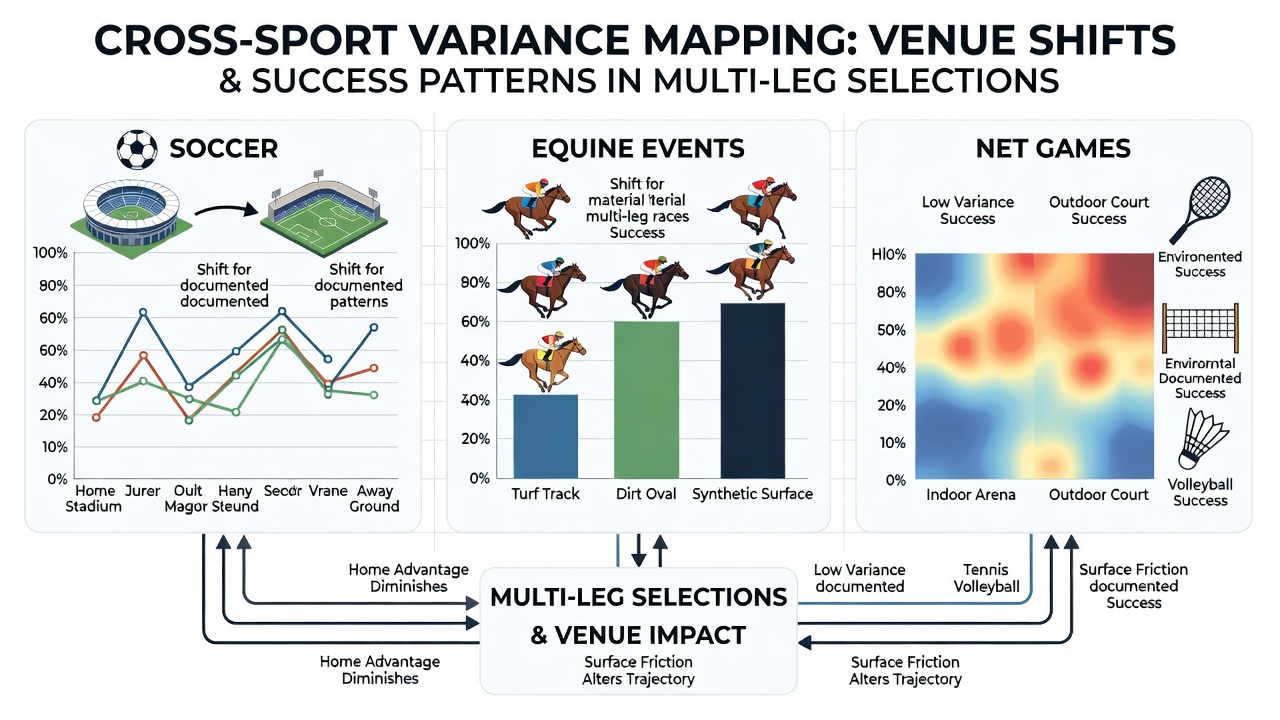
Soccer multi-leg bets often incorporate team form across several fixtures, yet venue shifts introduce documented adjustments to expected results because away sides record lower win percentages in leagues tracked by European sports data providers. Researchers analyzing matches from August 2025 through August 2026 found that accumulator success rates drop when selections include two or more away legs, with figures indicating reductions between 12 and 18 percent compared to balanced home selections according to aggregated league records. This variance appears because travel fatigue and crowd effects alter goal-scoring distributions, and mapping tools now overlay these adjustments onto historical payout logs to refine probability estimates for four-fold and five-fold bets. Observers note that leagues with pronounced travel distances exhibit stronger venue-driven deviations, which in turn affects the construction of cross-weekend accumulators that span domestic and cup competitions.
Equine events and track-specific performance adjustments
Horse racing accumulators depend on selections spanning multiple races or meetings, and venue changes such as switches from turf to synthetic surfaces produce clear alterations in finishing positions that researchers quantify through speed ratings and sectional data. Records maintained by international racing bodies reveal that horses with proven records on specific track configurations maintain higher place rates, whereas unadjusted selections across unfamiliar venues show success rate declines of up to 22 percent in multi-race bets. During the 2026 summer season, analysts mapped these shifts across Australian and North American circuits, where surface transitions coincided with measurable changes in payout distributions for exotic wagers that combine sprint and staying distances. Those who review logged results observe that early-season venue rotations at major tracks create temporary blind spots in form data until sufficient races establish new baselines.
Net games and surface or environment transitions
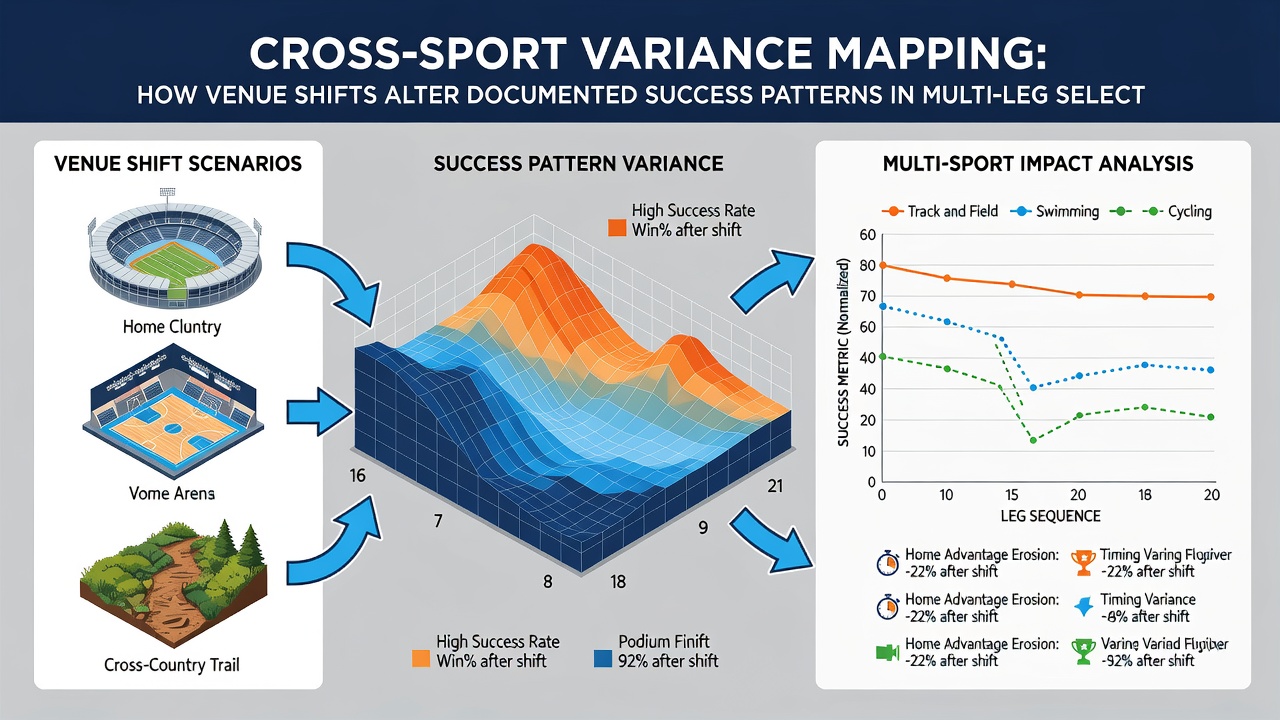
Tennis and similar racket sports feature venue shifts through court surface changes and indoor versus outdoor settings, and these factors modify serve and rally statistics that feed into accumulator models. Data collected from major tournaments up to August 2026 indicates that players transitioning between grass and clay surfaces experience altered win percentages in best-of-three and best-of-five formats, with multi-match selections reflecting reduced consistency when surface variables are not weighted. Research groups examining ATP and WTA records have quantified these effects by comparing baseline strike rates against surface-adjusted figures, and the resulting variance maps show that indoor hard-court events produce tighter distributions than outdoor events exposed to wind or altitude. Such patterns influence the viability of tennis parlays that span consecutive days or different tournament tiers where venue conditions diverge sharply.
Cross-sport mapping techniques and data integration
Analysts combine datasets from soccer, equine, and net sports to create unified variance maps that identify shared and distinct responses to venue changes, and these tools allow comparison of how accumulator hit rates respond across disciplines when location factors are isolated. Figures from academic and industry reports demonstrate that soccer exhibits the most consistent home advantage across seasons, whereas equine results display higher event-to-event fluctuation tied to individual track idiosyncrasies, and tennis outcomes cluster around surface familiarity. Reports from the Australian Sports Commission and peer-reviewed studies hosted by the National Institutes of Health illustrate these comparative patterns through longitudinal tracking that extends into 2026, enabling refined weighting of legs within multi-sport or single-sport accumulators. The mapping process incorporates regression adjustments for travel distance, surface type, and crowd density, which together produce revised probability inputs used by data platforms that publish updated success metrics.
Observed patterns in 2026 accumulator records
Logged results from the first eight months of 2026 reveal that accumulators incorporating venue-adjusted selections achieved higher verification rates than unadjusted counterparts across the three sports, with the largest gains appearing in equine and tennis chains where surface data receives explicit weighting. European and North American datasets show parallel trends, although the magnitude of adjustment varies by league depth and race class, and these records provide the raw material for ongoing refinement of variance models. Observers who examine payout snapshots note that early identification of venue-driven deviations correlates with more stable long-term performance in multi-leg formats, while delayed recognition leads to wider fluctuation in monthly returns.
Conclusion
Venue shifts generate quantifiable changes in success patterns for multi-leg selections, and cross-sport variance mapping supplies a structured method for incorporating those changes into analysis frameworks used in soccer, equine events, and net games. Data compiled through August 2026 continues to support the value of location-specific adjustments when evaluating accumulator viability, and the resulting insights remain accessible through ongoing research publications and industry datasets that track performance across changing conditions.