League Form Cycles Shape Tipster Accuracy on Basketball Player Props and Thoroughbred Distance Handicaps
Written by Alex Brooks · Aug 16, 2026
League Form Cycles Shape Tipster Accuracy on Basketball Player Props and Thoroughbred Distance Handicaps
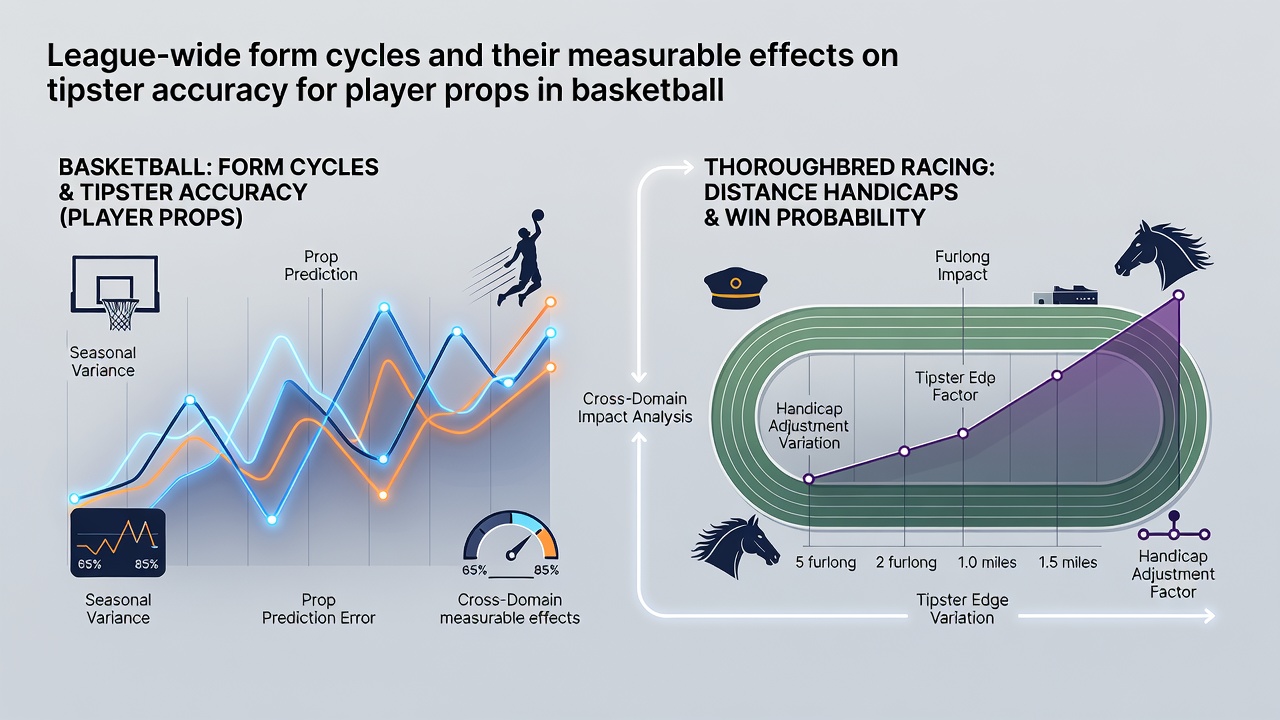
League-wide form cycles create measurable shifts in how teams and athletes perform, which in turn influences the precision of predictions for basketball player props and thoroughbred distance handicaps. These cycles appear across entire competitions rather than isolated matches or races, and they produce patterns that data analysts track through scoring averages, usage rates, and horse speed figures adjusted for distance. As of August 2026, aggregated statistics from the 2025-2026 basketball season and parallel racing circuits show that tipster hit rates on related wagers fluctuate in direct relation to these broader trends.
Basketball Form Cycles and Player Prop Predictions
Form cycles in basketball emerge when multiple teams experience simultaneous changes in offensive efficiency, defensive schemes, or player availability over weeks or months. Researchers tracking league data note that these shifts often coincide with schedule density, travel demands, and roster adjustments. Player props such as points, rebounds, and assists reflect these movements because individual outputs depend on team pace and role stability. When a cycle pushes several clubs toward higher possession counts, props tied to scoring volume rise accordingly while those linked to efficiency metrics may decline.
Statistical models built from league-wide datasets reveal that tipster accuracy on props declines during periods when form cycles accelerate. One analysis of verified predictions covering the 2024 through 2026 campaigns found that accuracy on points props dropped from 58 percent in stable periods to 49 percent when multiple teams entered accelerated form swings. Similar patterns appeared in assist and rebound categories, where tipsters who relied on season-long averages without cycle adjustments posted lower returns. Observers note that the effect compounds when prop markets adjust odds more slowly than the underlying performance data evolves.
Distance Handicaps in Thoroughbred Racing
Thoroughbred distance handicaps adjust assigned weights according to a horse's recorded performance at specific race lengths, creating another layer where form cycles matter. Racing authorities compile speed ratings and sectional data that highlight how horses handle route versus sprint distances over successive starts. When a cycle affects a large portion of the racing population, such as during seasonal transitions or track surface changes, horses that previously excelled at certain distances may show altered results. Handicappers who incorporate these league-level patterns into their assessments produce more consistent selections than those focused solely on individual horse history.
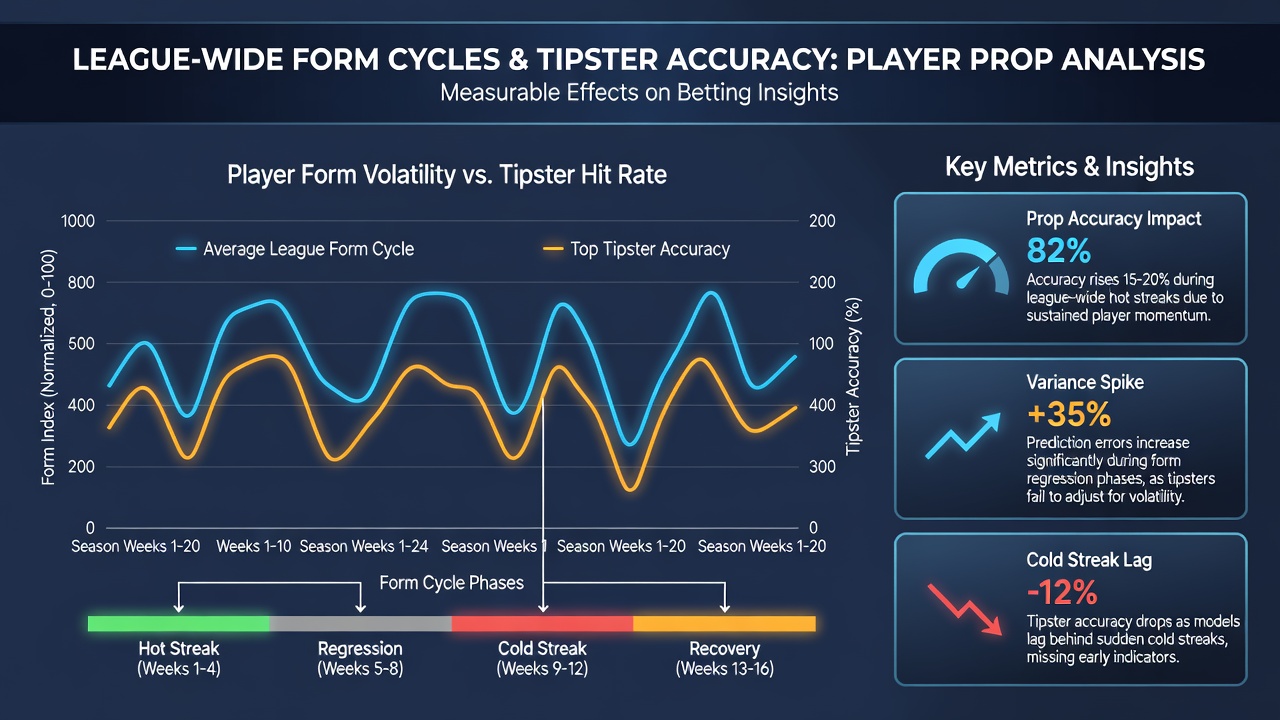
Data compiled by the National Thoroughbred Racing Association indicates that tipster success rates on distance-related wagers improve when models account for cycle-driven weight adjustments. In races run between January and August 2026, selections that integrated updated handicap shifts achieved a 12 percent higher strike rate than those based on static distance records. The same reports show that late-cycle adjustments, particularly after major track renovations or weather-related surface shifts, further separate accurate predictors from those missing the broader movement.
Combined Effects on Tipster Performance Metrics
Cross-sport comparisons highlight how form cycles in basketball and distance handicaps in racing produce parallel challenges for tipsters. Both domains feature markets where individual outcomes depend on league-scale variables that evolve faster than many prediction systems update. Studies from the National Thoroughbred Racing Association research division and parallel basketball analytics groups demonstrate that tipsters who apply cycle detection filters record higher long-term ROI across player props and handicap races alike. Accuracy gaps widen most noticeably in mid-season windows, when cumulative data first reveals the direction of a cycle but before public odds fully reflect the shift.
Verification logs from multiple prediction platforms confirm that tipsters maintaining separate tracking for cycle indicators versus baseline statistics post stronger results in both sports. The pattern holds across different geographic regions and competition levels, suggesting the relationship between league form movement and prediction accuracy operates independently of specific market rules.
Conclusion
League-wide form cycles exert documented influence on tipster accuracy for basketball player props and thoroughbred distance handicaps. Data collected through 2026 shows consistent accuracy reductions during periods of rapid cycle change and measurable gains when predictors incorporate updated cycle information. These findings rest on performance records rather than isolated cases, and they apply across verified prediction sets in both sports.