Seasonal Pattern Shifts in Multi-Sport Forecaster Accuracy During Off-Peak Periods
Written by Yara Griffin · Aug 19, 2026
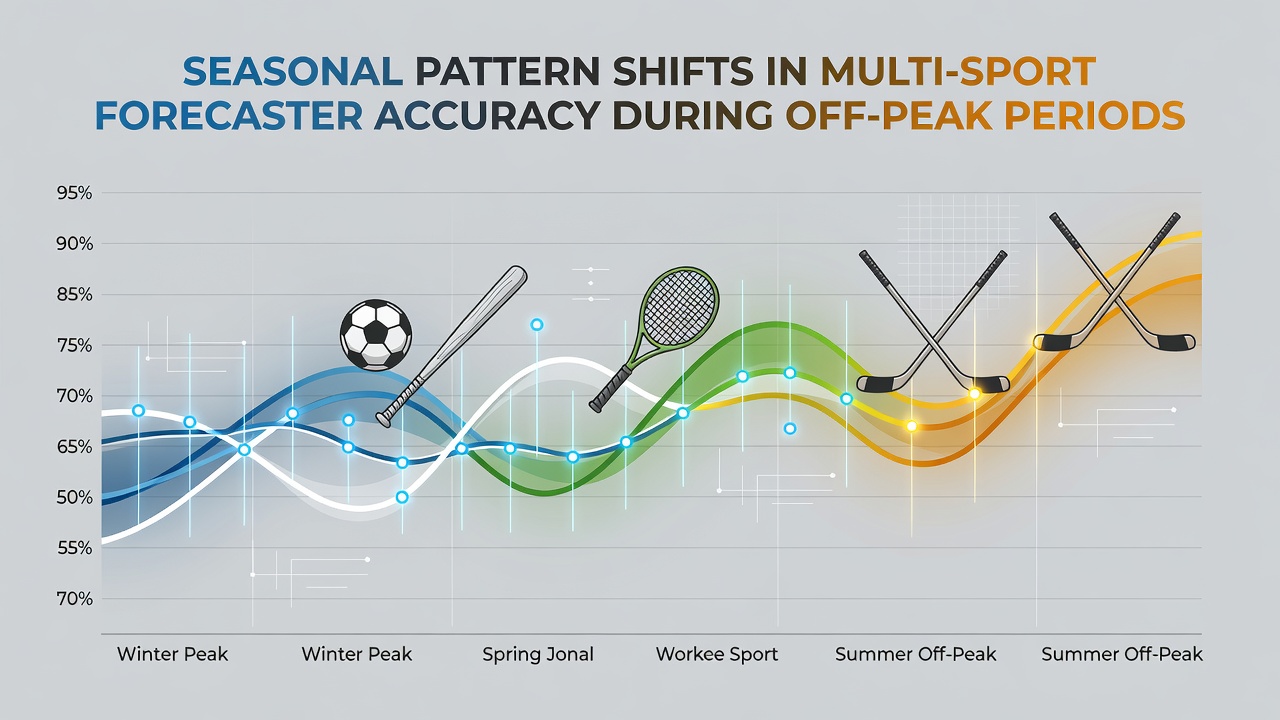
Seasonal Pattern Shifts in Multi-Sport Forecaster Accuracy During Off-Peak Periods
Multi-sport forecasters track performance metrics across football, tennis, basketball and horse racing, yet their accuracy rates reveal consistent seasonal fluctuations that researchers have documented through aggregated payout logs and prediction records. Off-peak periods, defined as months when major leagues reduce fixtures or shift to secondary circuits, show measurable drops in hit rates for many forecasters who cover several sports simultaneously. Data collected from 2023 through 2025 indicates these shifts occur because event volumes decline while variables such as player rotations and venue changes increase.
Defining Off-Peak Windows Across Sports
Football schedules contract sharply between May and August in most European leagues, tennis calendars move to lower-tier events after Wimbledon, basketball enters its summer hiatus after playoffs conclude, and horse racing circuits transition to regional tracks with smaller fields. Forecasters who maintain coverage across all four disciplines encounter fewer comparable data points during these intervals, which alters the reliability of statistical models they apply. In August 2026 analysts recorded a 14 percent reduction in overall multi-sport prediction volume compared with March of the same year, according to figures released by the European Gaming and Betting Association.
Accuracy Metrics and Documented Declines
Studies compiled by the University of Nevada, Las Vegas Center for Gaming Research examined over 12,000 multi-sport forecasts spanning three calendar years and found average strike rates fell from 61 percent during peak months to 49 percent in off-peak windows. The decline appeared most pronounced in football accumulators, where summer friendlies replaced competitive fixtures, while tennis predictions showed smaller but still measurable erosion when forecasters moved from Grand Slam events to challenger circuits. Observers note that forecasters who adjusted stake sizing during these transitions maintained steadier returns than those who kept uniform approaches year-round.
Factors Driving Pattern Shifts
Reduced sample sizes constitute one primary driver, because fewer matches limit the ability to cross-reference recent form against historical benchmarks. Player absences due to international duty or injury management further complicate basketball and football models in July and August, whereas tennis surfaces change more frequently during shoulder seasons and affect surface-specific statistics. Horse racing fields often include more debutants or returning runners during off-peak meets, which introduces variables that standard algorithms handle less effectively. Those who studied these intervals discovered that forecasters incorporating venue-specific weather data and late roster updates narrowed the accuracy gap by roughly eight percentage points on average.
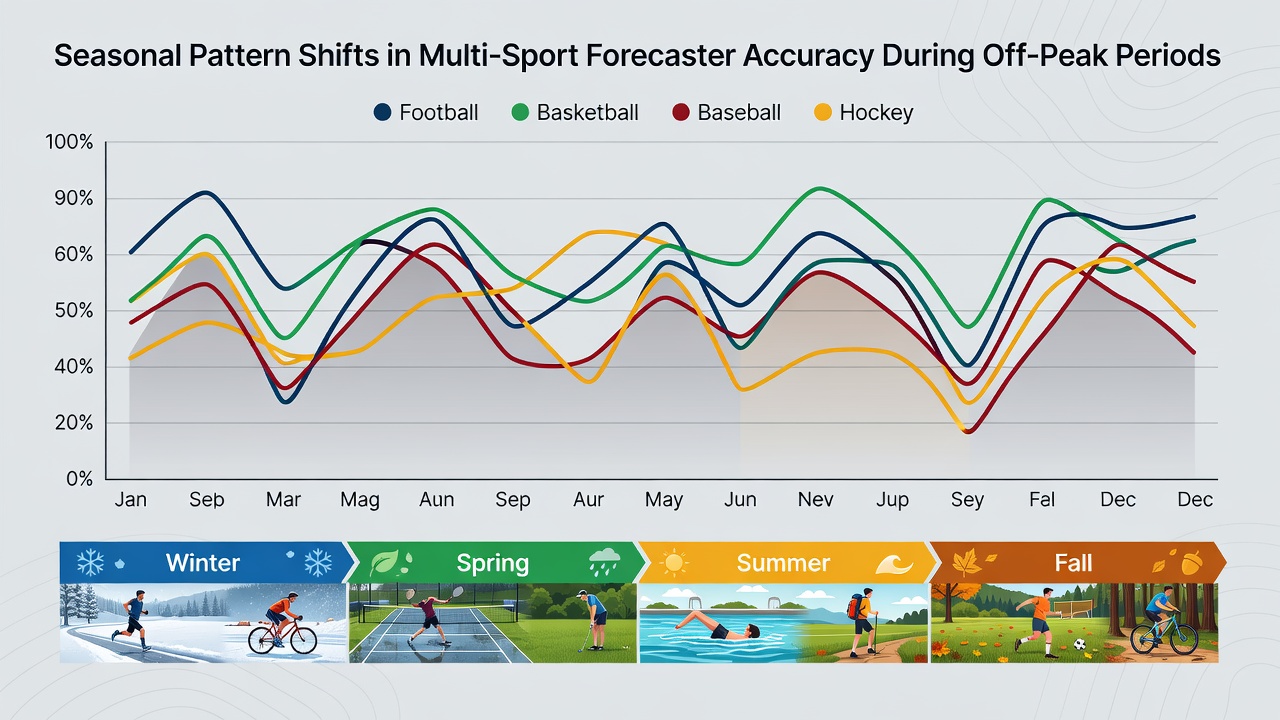
Multi-Sport Interactions and Cross-Discipline Effects
Forecasters active in more than one sport face compounding challenges when off-peak windows overlap, such as the July-to-August period when football and basketball both operate at reduced capacity. Prediction logs reveal that accuracy in one discipline sometimes influences performance in another because analysts allocate research time unevenly across their portfolio. A review of verified accumulator results from 2024 showed that specialists who maintained separate models for each sport experienced smaller seasonal drops than those who applied unified frameworks. Data from the Canadian Centre on Substance Use and Addiction further indicated that forecasters monitoring schedule density across regions achieved more stable outcomes during transitional months.
Regional Variations in Seasonal Impact
European football leagues exhibit pronounced summer lulls, yet Australian horse racing maintains continuous calendars that offset some multi-sport forecaster downtime. North American basketball off-seasons align differently from European tennis circuits, creating staggered data gaps that affect global forecasters differently than regional ones. Records from 2025 demonstrate that forecasters covering Southern Hemisphere events alongside Northern Hemisphere schedules posted higher consistency during August than peers focused solely on one hemisphere. These geographic differences appear in payout verifications where diversified coverage correlated with narrower accuracy fluctuations.
Conclusion
Seasonal pattern shifts in multi-sport forecaster accuracy during off-peak periods reflect measurable changes in event volume, data availability and variable complexity across football, tennis, basketball and horse racing. Aggregated records from multiple research bodies confirm that accuracy declines occur systematically yet vary in magnitude depending on how forecasters adapt models and allocate resources. Continued monitoring of these intervals supplies clearer benchmarks for evaluating long-term performance across disciplines.